
Lost at School
Review by Luke Ayers
As an Amazon Associate I earn from qualifying purchases

Greene, Ross W. Lost at School: Why our Kids with Behavioral Challenges are Falling through the Cracks and How We Can Help Them. Scribner, 2014.
Ross W. Greene’s Lost at School: Why Our Kids with Behavioral Challenges Are Falling Through the Cracks and How We Can Help Them has become an influential guide for educators and parents seeking alternatives to punitive discipline. It has become popular in classical schools as well that seek to cultivate students’ growth rather than merely punish retributively. Greene presents a hopeful and optimistic view of children’s behavior, summarized by the assertion early in the book that “kids do well if they can.” Greene spends the rest of the book, having taken this for granted, laying out his Collaborative and Proactive Solutions (CPS) approach to dealing with problematic behavior. He reframes misbehavior as essentially an issue of “lagging skills” and “unsolved problems,” not defiance or acts of the will.
Greene largely rejects traditional disciplinary methods like suspension and expulsion, arguing that these strategies fail to resolve the root causes of challenging behaviors and often make matters worse. He writes, “The most common consequence for challenging behavior in schools is exclusion, suspension, or expulsion. Yet these consequences rarely solve the problems that led to the behavior” (16). By contrast, CPS focuses on understanding the child’s experience and partnering with them to solve problems collaboratively.

Greene’s approach and starting assumptions are initially compelling. A large amount of the misbehavior that educators see, especially that which may present as defiance, is truly due to a lagging skill. If a student is unable to do something, they will often refuse rather than articulate the missed prerequisite skill. The CPS approach acknowledges that challenging behavior is often the result of lagging cognitive and emotional skills, such as flexibility, frustration tolerance, and problem-solving. It confronts many misconceptions that label children as simply “bad” or “defiant” without understanding the broader context. Greene uses detailed case studies and modeled conversations, along with downloadable or copyable checklists for teachers to explain the approach, interweaving his argument throughout.
Yet, for all its insights, Lost at School presents a somewhat incomplete view of childhood behavior because it underemphasizes the child’s moral agency. Greene’s thesis—that “kids do well if they can” is an absolute statement that does not leave room for a child’s very real ability to exhibit willful defiance or deliberate bad choices. The mantra that “kids do well if they can” is certainly true for many children much of the time, but it risks reducing all challenging behavior to skill gaps and overlooking that children are moral agents.
This is a significant limitation of his book and CPS framework. Charlotte Mason insisted emphatically that “children are born persons,” endowed with intellect, will, and moral responsibility from birth. They are not simply learners needing skill-building, but fully human beings capable of making choices for good or ill. Greene’s framework, by focusing heavily on skill deficits, tends to portray children primarily as struggling learners rather than persons accountable for their actions. Of course, many times Greene’s framework is just the right thing for a child in a given situation—but when a child does make a deliberate choice, it is unjust and unfair to the child not to hold her accountable.

Education is not about cultivating skills, but character. The risk of overemphasizing skill deficits is that it can prevent a child from maturing. Taking responsibility for oneself is a part of maturation, and a teacher fails in his duty when he does not push a student to do so. An authentic education should not only teach children the skills they need to behave appropriately, but also teach them to desire the good as well.
To his credit, Greene aims early on to address the objection that the CPS approach would let children “off the hook,” claiming that “accountability isn’t working” in most schools. And, also to his credit, he’s right about many schools. If misbehavior is truly the result of a lagging skill, then accountability will never work. If a teacher or administrator misunderstands the nature of the child’s will as it relates to the choice he made, the consequence chosen will have diminished or no impact. Greene’s approach does cover all circumstances.
Teachers and parents can and should use Greene’s tools to identify and support lagging skills, but they should do so alongside an understanding of children as moral agents who can choose for good or for ill. A child who interrupts in class may have the lagging skill of impulse control, but may also be willfully impatient or be doing so even more blatantly. The reality of both possibilities must be addressed to nurture the whole child and identify the right next step. Integrating Greene’s CPS model with a classical anthropology would enhance its effectiveness. Greene emphasizes adults’ obligation to define expectations clearly and engage children with charity and justice, in a spirit of genuine collaboration.
Lost at School has earned its place on the shelves of so many school leaders across all kinds of different schools, but a wholesale adoption of the framework in the book misunderstands the nature of children and, even if it improves the discipline situation in a school, classroom, or even one child, misses the mark in some important ways. For the book to be the strongest possible tool for educators, some of Greene’s basic assumptions need to be rejected or at least altered.
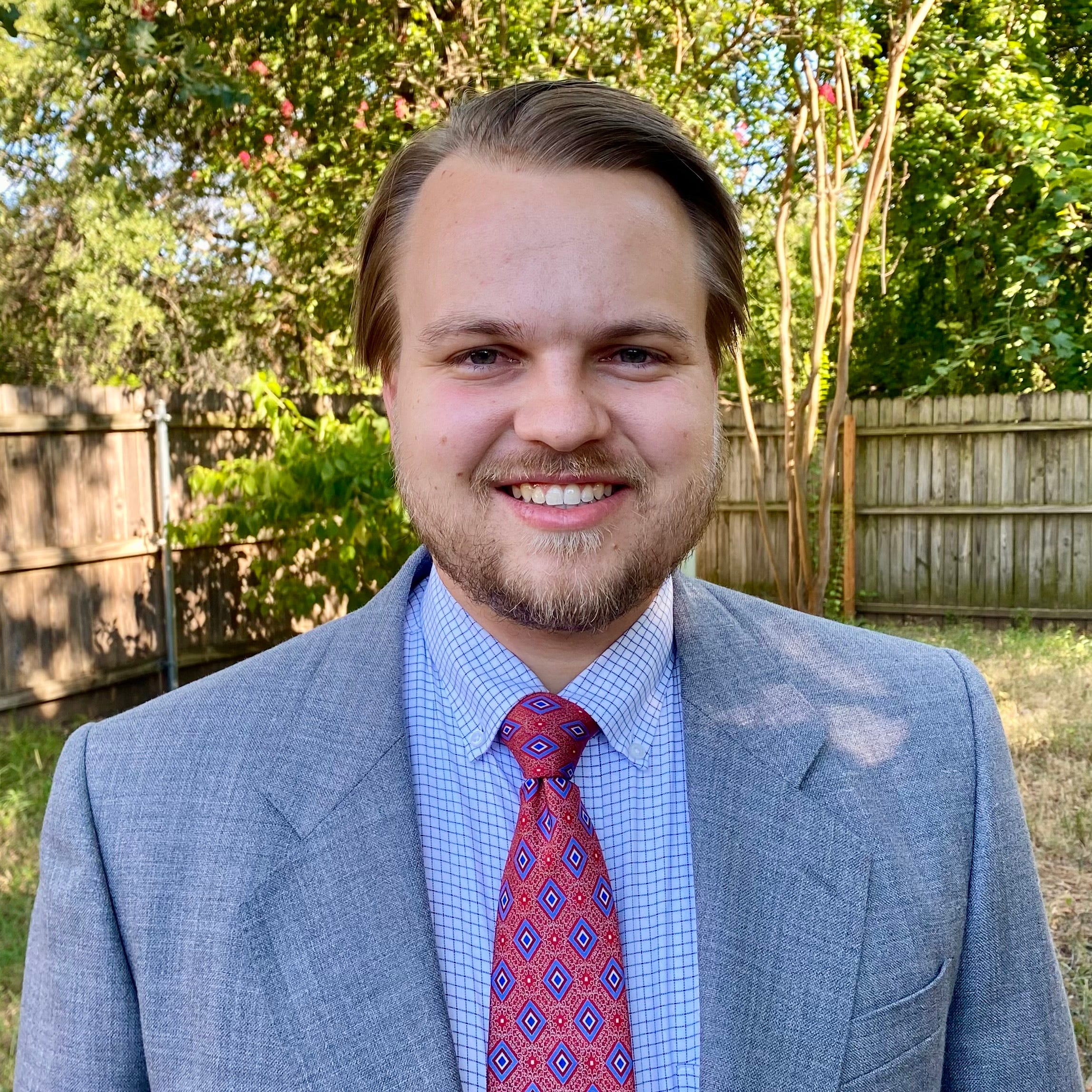
Luke Ayers is an administrator at a classical charter school in North Texas, where he lives with his wife and two daughters. A graduate of Trinity University in San Antonio where he majored in Economics and minored in Latin, he has taught both subjects. He is a recipient of the Intercollegiate Studies Institute’s Top 20 Under 30 alumni award for 2024, and is a lover of all aspects of the Western tradition. He is currently pursuing a graduate degree in Classical Education at the University of Dallas.