
Responses to Common Misconceptions of Active/Immersive/Natural Methods of Language Teaching
Article by Laura Eidt
As an Amazon Associate I earn from qualifying purchases

A lot of ideas are floating around the internet regarding a grammar centered approach vs. an active or immersive one, such as:
“Latin is not like modern languages and shouldn’t be taught like one.”
“The goal of Latin instruction is to read not to speak.”
“Active/Immersive/Communicative/Natural Methods only work for fluent speakers and are frustrating, because you’re left to figure things out on your own.”
“Active/Immersive/Communicative/Natural Methods are not suited for deeply engaging with texts.”
“The natural method overloads memory and gives a weak foundation.”
“The appropriate way to teach anything is by systematic, logical, explicit instruction.”
“The premise of learning a second language like a child is wrong. The appropriate way to teach anything is by systematic, logical, explicit instruction.”
Drawing on the history of Latin teaching and research in Second Language acquisition, I will try to explain why these claims are in fact misconceptions.
1. “Latin is not like modern languages and shouldn’t be taught like one.”
Latin is unlike modern languages only insofar as it is linguistically classified as a dead language, one with no native speakers. But it is still a human language, and one that people have been actively using to communicate in for over two millennia and that has been taught by active, productive methods throughout history. (For example, did you know that C.S. Lewis had a Latin letter exchange from 1947 to 1963 with two Italian priests, because Latin was their only common language?) This statement is often coupled with the idea that Latin is really different and more difficult than modern languages. However, despite being a highly inflected language, Latin is in fact easier than many modern foreign languages. (My colleague Dr. Erik Ellis actually maintains that Latin is easier than German!) Many modern languages are highly inflected (Finnish, for example, has 15 noun cases and Hungarian has 18; Basque and Estonian each have more than 10 cases), and are learned by “modern language methods” all the time (for more on language difficulty ratings, check out this Foreign Service Institute article). Another problem of this statement is that it generalizes and conflates all modern language teaching methods into one. There are definitely some methods that are more effective than others, and as a teacher of Modern Languages at the University Level, I am painfully aware of how often students come out of four years of high school language classes without any sound knowledge or abilities whatsoever. But that really just testifies to the sad state of language instruction in many (most?) US high schools, not to the methods themselves. Especially in a classical school, both Latin and modern foreign languages should be taught in the Liberal Arts tradition, with the entire Trivium (i.e. the Arts of Grammar, Logic and Rhetoric) in mind.
2. “The goal of Latin instruction is to read not to speak.”
I highly recommend Nancy Llewellyn’s excellent and very short and readable piece Why Speak Latin, in which she explains that using Latin actively in the classroom is not about ordering a cappuccino in Latin or chitchatting with friends. Using a skill actively is by far the most effective means of achieving true mastery of that skill:
Speaking Latin in the classroom is not an end in itself but, rather, a uniquely effective means to the goal which has been the primary objective of all Latin teaching since the end of antiquity: reading Latin literature. To paraphrase a colleague's pithier expression, "living Latin" is ultimately not about learning to speak, it's about speaking to learn.
In other words, speaking a language actively helps students more fully internalize language patterns. And it is also about learning to think in the language to allow students to really enter the world or even the mind of authors rather than transferring an author’s words and world into ours:
Our modern language colleagues know that mastery comes when the student has internalized the language. They understand that internalizing happens through communication; through experiences that intimately, directly, and frequently involve the hearing and speaking faculties. Internalizing requires quick, immediate exchanges; communication that promotes thinking in the target language, without recourse to English.
Active production of the language is the best way to fully internalize language patterns and producing the language actively, orally and in writing, is absolutely necessary for real fluency. Exclusively focusing on reading is a much slower and less effective strategy even when the goal is “just reading” because it is a lot more passive (recognizing something vs. producing it actively). When you try to actively produce a language you notice your gaps and areas you haven't fully internalized. But more importantly, in the classical tradition, just reading was never the goal; active command of the language was fostered until well into the 1800s. This is discussed in detail in the book Latin: Story of a World Language, by Jürgen Leonhard (especially in the chapter “Europe’s Latin Millennium).
3. “Active/Immersion/Communicative/Natural Methods only work for fluent speakers and are frustrating, because you’re left to figure things out on your own.”
Often when active/immersion/communicative/natural methods are criticized, they are all conflated into one. However, there are important distinctions, and not all modern language methods, or classes, are equal. But all current approaches emphasize comprehensible input as the foundation for language acquisition.1 The emphasis really is on comprehensible though. If I tried to learn Japanese by listening to a radio program in Japanese, I wouldn’t learn anything even if I did this for 2 hours a day for the next 5 years, and it would indeed be frustrating and inefficient. However, that is not what good communicative language teaching is about. The “comprehensible” in comprehensible input means that the teacher does everything in their power to make the language understandable – gestures and actions, images or quick sketches on the board, synonyms and paraphrases, and if necessary, even English translations (personally I prefer a quick English translation if I know the target language explanation would require a lengthy paraphrase and would potentially not be comprehensible to all students). In a good active/immersion/communicative classroom, students are not at all left to figure things out on their own, and grammar is often taught explicitly (including in the students’ native language).
And while I would agree that a pure immersion course would require a fluent speaker, we don’t need to be purists because pure immersion isn’t necessary. The ACTFL (American Council on the Teaching of Foreign Languages) “recommends that language educators and their students use the target language as exclusively as possible (90% plus) at all levels of instruction during instructional time and, when feasible, beyond the classroom.” (here) But if that too sounds too daunting, it isn’t necessary to completely abandon the idea and resort to drilling charts and chanting endings instead! There are lots of things a non-fluent language teacher can do:
Script out (or finding online) ten or fifteen commands to use and play “Simon says”
Script questions about a reading or a picture study ahead of time
Spend a good chunk of class time memorizing connected text (hymns, proverbs, prayers, bible passages, entire psalms, odes, etc.)
Increase reading time, including re-reading time (read out loud as a class, re-read with a partner)
Use or create dialogs/reader’s theater versions based on stories you read, or have students create their own modeled after a text they read
Use a curriculum that is rich in input, including for grammar-focused exercises (such as Latin through Stories for elementary students, the Reges Romae series for Middle School and Lingua Latina for middle and high school students
Attend a Biduum, Rusticatio or other immersion event during the summer

4. “Active/Immersion/Communicative/Natural Methods are not suited for deeply engaging with texts.”
This is truly puzzling to me and my suspicion is that people who make such a claim have never learned a foreign language to a level where they could think in it and deeply engage in it.
Now, it is true that in many purely communication-focused modern language (ML) classrooms, deep engagement with a text is not even a goal. Many ML textbooks published in the last twenty years or so don’t even include significant reading passages in beginner textbooks (the most popular text types seem to be restaurant menus and travel brochures). There is definitely the very unfortunate trend toward less and less reading (and less and less significant reading material). However, this is a deficiency in ML textbook goals, not in active/immersive/communicative/natural methods as such.
Au contraire, discussing a text in the target language allows us to really enter the mind and world of authors on a much more intimate level than translation does. Translation effectively keeps us out of the language and thought patterns: it involves transferring a text into our framework and way of thinking rather than making the effort to enter into and adopt the author’s way of thinking. In a translation-based class, students typically only understand the translated text, rather than truly engaging with the original work.
5. “The natural method overloads memory and gives a weak foundation.”
The criticism here seems to be that a) students are exposed to too much vocabulary and b) that they won’t learn any grammar. Regarding the first point, the idea behind “comprehensible input” is exactly the opposite of memory overload. First, in an input-rich class, students hear, see, read, say the target words over and over, in meaningful contexts and usually accompanied by images, gestures, and other comprehension help (including translation). So, the opposite is true, and study after study has shown that vocabulary is best learned in context or thorough word-image associations, not as isolated lists.2
The second point about the weak foundation is based on the false premise that knowing words and grammar charts in isolation provides a strong foundation. Many teachers I’ve talked to over the years have wondered how it is that their students, after years and years of drilling and chanting charts, still don’t recognize basic words, still misinterpret endings, and still don’t comprehend what they’re reading. And all this even though they can recite “a-ae-ae-am-a-ae-arum-is-as-is” in their sleep! That is because words and endings in isolation don’t give the brain a “hook.” It’s like spending years and years memorizing the shapes of individual puzzle pieces but never being allowed to see the picture you are supposed to create, or to try and put the pieces together. (And it’s a 5000-piece puzzle!)
Comprehensible Input, on the other hand, allows students’ brains to integrate the patterns of the language. The strength of the foundation it provides depends on the amount, quality, and comprehensibility of the input received, so not all “CI” classes are equal. And there is really no contradiction between an input rich class and explicit grammar instruction, even if it is in English. But in an input-rich class, all grammar instruction will happen in a meaningful context, so the “-ae” “-am” and “-arum” have a specific referent and concrete meaning in the context of a sentence.
6. “The appropriate way to teach anything is by systematic, logical, explicit instruction.”
An underlying idea of this criticism seems to be that natural language acquisition is unsystematic and disordered. Second Language Acquisition research has investigated this extensively and recognizes that “language acquisition is largely ordered. It is piecemeal and stage-like and generally not linear. The ordered nature of language acquisition is observed across leaners” (VanPatten, Keating, Wulff, p. 277). In other words, natural language acquisition is ordered in terms of developmental sequences (what is acquired in what order), but individual rates will vary, and there may be regressions and plateaus rather than a perfectly linear progressive development. Natural language acquisition is systematic and follows an inner logic, even if it isn’t explicit.
And surely all teachers know that just because you have systematically, logically, and explicitly explained, say, the dative, that doesn’t mean students fully understand it and will always recognize (let alone use) it correctly. It’s important to realize that “implicit instruction and explicit instruction describe the types of strategies teachers use in class. These terms do not necessarily describe what kind of learning takes place or what type of knowledge is created” (Bryfonski and Mackey, p. 155). Systematic, logical, explicit instruction doesn’t automatically result in full understanding. A student who can define what a participle is and has memorized the rules for forming doesn’t necessarily understand how a participle is used in a given sentence (let alone be able to use one correctly). That understanding only comes from being exposed to many, many sentences with participles in them.
Overall, the idea that “the appropriate way to teach anything is by systematic, logical, explicit instruction” is problematic because it implies that anything that isn’t explicit is also not systematic or logical. That is simply not true, and also seems to be based on a limited understanding of the term explicit. Is the most appropriate way to teach children to swim by logically explaining how the human body stays afloat, or to get the kids into the water and show them and have them imitate movements? Is the most appropriate way to introduce someone to poetry to have them memorize all the possible rules of versification, meter, and figures of speech, or to read a range of beautiful poems with them and (perhaps have them memorize and recite some)?
This is what James Taylor defines as Poetic Knowledge, i.e.
an encounter with reality that is nonanalytical, […] a spontaneous act of the external and internal senses with the intellect, integrated and whole, rather than an act associated with the powers of analytic reasoning. […] It is, we might say, knowledge from the inside out, radically different from a knowledge about things. In other words, it is the opposite of scientific knowledge. (pp. 5-6)
This question of teaching logically and explicitly about language vs. teaching language through the language itself has come up throughout history, here are some quotes:
Languages were made not by rules or art, but by accident, and the common use of the people.
(John Locke, Some Thoughts Concerning Education, Section 168)
Outside a very small number of elementary points, it may be said that rules are a hindrance to beginners, though they may help those who have already made some definite progress. No other guide for the formation of spoken and written style can be laid down, beyond reading and following older Latin writers.
(Vossius, De Studiorum Ratione opuscula, c. 2; qtd in Corcoran, Studies in the History of Classical Teaching; Irish and Continental, 1500-1700 p. 164)
Most teachers to-day give instruction in language, not to give mastery of the language itself, but to produce experts in Grammar. This is the height of absurdity.” (Crenius, Consilia et methodi aureae studiorum optime instituendorum; 1692; qtd in Corcoran, Studies in the History of Classical Teaching; Irish and Continental, 1500-1700 p. 185)

7. “The premise that one can learn a foreign language like a child learns their native language is wrong.”
There is definitely some truth to this as there’s an undeniable difference between an adult brain and a toddler’s brain. And learning language for the first time is certainly very different from learning a second (or third or fourth) language later in life. One of the most significant differences is that the amount of time and input that a child learning their first language is exposed to is significantly more than what a classroom situation can achieve.
But I would argue we don’t necessarily need quite as much time. Really, a child’s first language acquisition is by no means efficient, because their language acquisition is intimately tied to acquiring knowledge about the world around them and about the nature of language. In their first language, children get an entire year or more just to imitate sounds! Then they usually spend another year or so with just single or two to three-word utterances, and by the time they are five, although they could be considered “fluent”, they are typically still not a hundred percent grammatically accurate and of course still have lots of vocabulary and complex grammar structures to learn. By contrast, an educated adult, in a similar immersive situation and equipped with their overall cognitive advantages, will achieve much higher degrees of language competence than a child after five years.
So, first language acquisition isn’t entirely like second language acquisition, but it also isn’t wildly different. The claim that we don’t learn a second language in the same way as a first language has two problematic underlying ideas: one, that learning a second language is significantly different from learning a first language, and two, that while a first language is learned through exposure, a second language can’t be learned that way and just needs explicit instruction. These ideas are fundamentally incorrect.
Most importantly, when we learn a second language, no matter at what age, the processes of how the human brain acquires language don’t fundamentally change. We are still learning a human language, and using a human brain to do so (see Bailey). And what all human beings need as the foundational underlying precondition to language acquisition is large amounts of input. The research is clear on that (see e.g. Henshaw/Hawkins; VanPatten; Gass). However, depending on the age of the learner, information about the language and its grammatical structures can also be very helpful in sorting that information and processing it more efficiently.
But for such grammatical information to be effective, we need a brain that is actually capable of processing abstractions; such information is useless for a young child, and for any age, will only truly contribute to assisting acquisition when those linguistic elements have first been encountered in the input abundantly and the brain has had time to start the process of acquisition.
I have personally encountered this in my Latin learning journey. When I first began, using Wheelock’s Latin, I tried to memorize all those paradigms – noun declensions, the verbs in all their many tenses and moods, personal pronouns, interrogative pronouns, demonstrative pronouns, relative pronouns, active and passive infinitives, participles, gerunds… And it was mostly just a heap of sounds that I couldn’t attach real meaning to. For example, the future active infinitive (e.g. ambulātūrum esse) and the perfect passive infinitive (e.g. ambulātum esse) differ by just two letters, so I could never remember which was which and what they meant. If there’s no context, there’s no meaning, so to me these were just random sounds I tried to memorize (and failed miserably). After hundreds of hours of input, this two-letter difference became meaningful. And then the charts suddenly made sense too.
The more we’re able to think abstractly the more we’re able to use that ability to help make sense of the input. For older learners (perhaps starting in late elementary school), there is no reason not to draw on our brain’s ability to think logically and to systematize and sort information. And indeed, some current research in Second Language Acquisition emphasizes that “interaction without any attention to language forms does not necessarily improve linguistic accuracy.” (Loewen 64). Anyone teaching a language to young children, however, should keep in mind that a six- or seven-year-old is much closer to first language acquisition than a fifteen, twenty- or thirty-year-old. Before the age of abstract thought, abundant amounts of input is all the child needs.
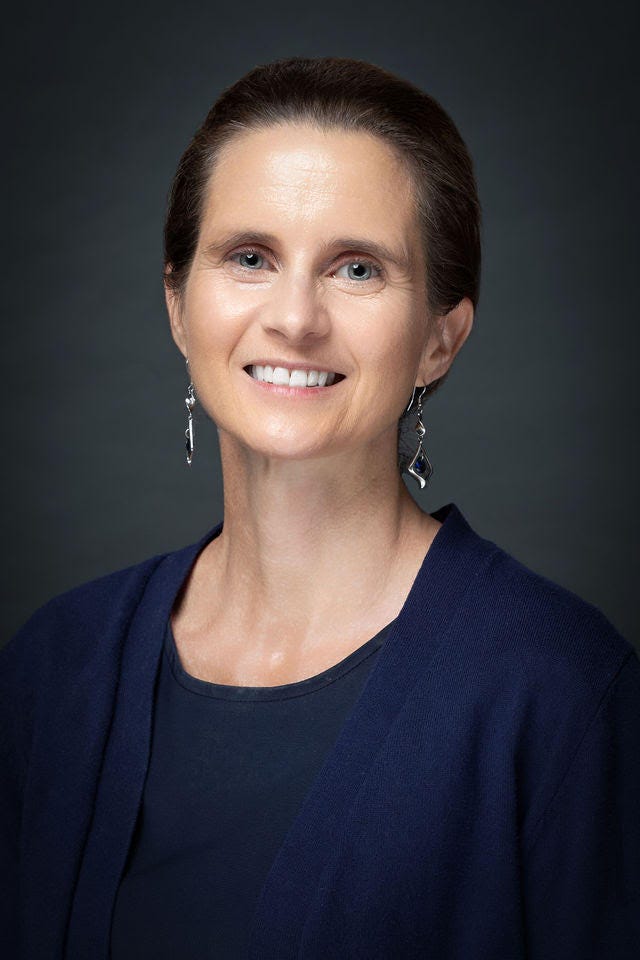
Dr. Laura Eidt teaches in the German, Spanish, Comparative Literature, Humanities and Classical Education programs at the University of Dallas, and is Director of the Humanities Program and of UD’s K-5 Latin curriculum Latin Through Stories.
Laura Eidt grew up in Germany and received her B.A. in English, Spanish, and German Literatures and Linguistics from Hamburg University. After a year-long scholarship to study at the Universidad Complutense of Madrid, she decided to pursue a career in Comparative Literature at the University of Texas in Austin. She wrote her M.A. thesis entitled Poetry of German Expressionism and the Spanish Avant-garde: Re-Contextualizing García Lorca’s Poeta en Nueva York and her doctoral dissertation, Writing and Filming the Painting: Ekphrasis in Literature and Film, which was also published as a book. Having studied English, Spanish, French, Italian and Latin (in addition to her native German) at various points in her life, she is also highly interested in how languages are learned, how they are related, and in effective ways of teaching foreign languages. This interest has led her to develop various classes on foreign language pedagogy, as well as the K-5 Latin curriculum for UD’s St. Ambrose Center.
Theories in Second Language Acquisition: An Introduction. Ed. by Bill VanPatten, Gregory D. Keating, and Stefanie Wulff. NY and London: Routledge, 2020. p. 194
See “The Acquisition of Vocabulary” in Introduction to Instructed Second Language Acquisition, by Shawn Loewn (NY and London: Routledge, 2020), pp. 126-148. This approach to vocabulary learning is also emphasized by Fr. Ganss as the most prevalent at times when Latin instruction was at its height during the Renaissance. See “Historical Sketch of the Teaching of Latin”, in St. Ignatius’ Idea of a Jesuit University, by George E. Ganss (1954), pp. 108-248.