
Is Classical Education Against the Machine?
How Paul Kingsnorth’s critique of modern life challenges (and potentially renews) the aims of classical education
As an Amazon Associate I earn from qualifying purchases

Two bald men fighting over a comb. That’s the image Paul Kingsnorth, in his new book Against the Machine, uses to critique the so-called “culture war,” a war I worry has distracted classical educators from the actual art of culture. In what follows, I’d like to review this book with an eye toward its relevance to classical education. But first I should perhaps offer some disclosures and context.
I have read fairly little of Kingsnorth’s work; indeed, other than Against the Machine I have only managed to read a few pages of The Wake (whether because I’m a medievalist or a father of five I’m not quite sure), and beyond his books I have only read a couple of his essays and a smattering of what he’s posted to his substack, The Abbey of Misrule. And I’m not exactly a classical educator, though I’ve taught a few courses for the original MA in Classical Education. But, like Kingsnorth, a few years ago I gave up my day job (as a professor) and took up homesteading with my family; we live on a few acres of land in an old stone farmhouse with a barn surrounded by cows, pigs, and sheep, chickens, ducks, and quail, three dogs and a barn cat who has almost established himself as a house cat. For almost two years I’ve milked a cow almost every day. In Kingsnorth’s terms, I am (like him) a “cooked” barbarian: I’m “against civilization” but still living within the walls of the city. Trying to be in the world but not of it, one might say. (Indeed, at one point, Kingsnorth calls this “being in the Machine but not of it.”)

And here it might help to define some terms. For Kingsnorth, “culture” and “civilization” are neither the same thing nor synonyms. He’s anti-civilization but pro-culture—though he thinks we in “the West” have largely either abandoned our culture or had it stolen from us, depending on how you look at things. Indeed, he tells an anecdote of finding himself in an Indonesian jungle with people from various parts of the world who could sing folk songs from their respective countries when he and the other English-speakers could not, because they didn’t know any, for they no longer had a culture. This is one of his main points: like Athens and Rome, “the West” has already fallen, and the so-called “culture war” is merely a fight over the rubble. I’m not sure Kingsnorth ever puts matters in quite this way, but I think he might say that Westerners lost their culture the more they sought to be civilized.
Kingsnorth is a Londoner by birth, so he knows what it means to live in a city, and he’s not the first Englishman to see the city in general (or London in particular) as hellish; in Paradise Lost, when Satan departs from hell to try tempting the humans in Eden, Milton says he looks back on hell as a man looks back on the city as he departs it for the countryside. So Kingsnorth is part of a long tradition of English writers who bemoan the vices of the city and extol the virtues of the countryside. But he’s not a Romantic or a new Rousseau; indeed, he critiques Rousseau and finds his inspiration further back in time. He’s not shy about how much the book in many ways simply brings together the work of other writers; I mean no disrespect at all when I say that one could almost read it like an annotated bibliography, and the book would honestly be worth reading if only for the reading list one could glean from it.
But, thankfully, to Kingsnorth’s credit, Against the Machine is worth reading for any number of reasons, for its insights into the dangers of digital technology or its convicting account of how what we most need to do to counter those dangers is to practice moderation, even abstinence. The book is most superficially and most obviously about digital technology, things like social media and AI, but those things show up less (and in some ways less compellingly) than one might expect, for if we have eyes and ears and brains we know that social media and AI are ruining people’s lives and that the corporate executives profiting off this ruination don’t care the least bit about any human soul (including their own) much less any particular culture or even “Western Civilization.” The real value of the book, then, lies in how it traces the line of how we got here through so many things that so many of us were taught to praise and perhaps have even taught others to praise. Along these lines, Against the Machine might offend some in the Classical Ed movement.

Let’s get to the point. “The West Must Die.” That’s the title of chapter 23. And that’s the kind of statement that I suspect will rile up any number of classical pedagogues. But if we are willing to listen to his warning voice, however much it may disturb us, I think we can hear hope in it—indeed, we might see how classical education has a role to play against the Machine. In this provocatively-titled chapter, Kingsnorth begins by referring to the work of Iain McGilchrist, a psychologist who suggests that “the Western way of seeing … is rooted in the brain itself” (266) and that this way of seeing has led us to lack a sense of belonging in the world (267): “Our way of seeing is deeply unbalanced, and it is wrecking our culture and our world” (268). Because our way of seeing is wrecking our culture, Kingsnorth concludes that we should “Stop all the ‘fighting’ to preserve something nobody can even define, something which has long lost its heart and soul. … Forget … about ‘defending the West’. Think instead about rebuilding a real human culture, from the roots” (270).
Here’s where classical education may be able to save, if not Western civilization, then true human culture: “we are going to have to start seeing differently … to see the world as an organism rather than a mechanism, and then to express it that way, through art, through creativity, through writing, through our conversations” (271). He concludes this chapter by saying, “We unmade the world. Now we are going to have to remake it again … to write poems and walk in the woods and love our neighbors … We might find ourselves again. Could we even find home?” (272). It would be easy to have a knee-jerk reaction against some of Kingsnorth’s critiques of the West, but if we bear with him we see that throughout the book he encourages us to seek the transcendent, which classical schools and educators at least claim to do.
I don’t care to point fingers here, especially when it seems to me such places are still doing good work even if they are, to use Kingsnorth’s distinction, perhaps more “cooked” than may be ideal, but the corporate, franchise model of classical schooling looks rather machine-line with its cubic buildings that seem to have been designed by the same people who design grocery stores, which Kingsnorth at one point recounts suddenly realizing are appallingly fake and ugly. It puzzles me how a school that claims to care about goodness, truth, and beauty would house itself in plastic and bathe itself in fluorescent light. Doing so perhaps indicates how subsumed we have all been into the Machine: we don’t even realize how unnaturally machined our dwellings have become. You could walk through many a classical school without ever touching a natural material.

You could also walk though many a classical school and see plenty of “smart” phones, in the hands of teachers and administrators if not students. A couple years ago, when I first started teaching for the MA in Classical Ed program at the University of Dallas, at least one student noted a situation in which a classical school had a no-phone policy for students but essentially required teachers to have “smart” phones so they could access various apps intended to “facilitate learning” or “improve communication.” As this person noted, it’s hypocritical to expect students not to use a machine that the teachers are forced to put on full display throughout the day.
Perhaps you like your smartphone and your plastic workspace, but I don’t think you could seriously argue with Kingsnorth that such things are the workings of “the Machine”: that they exist for interests other than and even inimical to your own human flourishing. If these things are harming the teachers we claim to respect and the students we claim to love (as they obviously are), then why aren’t we stridently against them? Kingsnorth says, “When I see a small child placed in front of a tablet by a parent on a smartphone, I want to cry; either that or smash the things and then deliver a lecture. … I won’t have a smartphone in the house. I despise what comes through them and takes control of us. Takes control of me, when I let it” (302). All of those seem to be reasonable responses to a thing that serves as the nexus for so much vice. Why are classical schools expecting their teachers to use such devices for their work rather than smashing them?

Or, to follow Kingsnorth’s more positive personal example, why don’t more classical schools have gardens and chicken coops and real wood furniture? Why aren’t more classical schools clearly interested in culture rather than civilization, in folk songs rather than so-called free markets?
I’m not necessarily promoting either of these places, neither of which I know much more about than can be gleaned from their websites, nor do I by any means want to put into Kingsnorth’s mouth some endorsement of such places, but I think the kind of school Kingsnorth might prefer would be ones like St. Gregory’s and St. Martin’s, the latter of which calls itself classical (but doesn’t belabor the point) and the former of which takes some pains to note that one could call them classical but that they don’t particularly care to bother with such labels.
Both of these places speak of replacing screens, those pinnacles of Western civilization, with what I (and I think Kingsnorth) would call culture. St. Gregory’s says, “our students are not permitted the use of television, music players, personal computers, cell phones, or other electronic devices. . . . In order to freely develop a wholesome imagination in students, the Academy embraces this environment of technological poverty.”1 St. Martin’s says, “An imagination fed predominantly on the neon glow of screens is weakened by passivity and contact with the unreal. St. Martin’s replaces screens and the noise of pop culture with the great outdoors and with folk music and poetry.”2 Notice how both recognize the primacy of the imagination and how the Machine makes the imagination weak and unwholesome.
I’m not sure what Kingsnorth might say about boarding schools, for he chose to homeschool his own children and in general doesn’t seem too keen on dividing up families for the sake of specialized tasks. And, for what it’s worth, I have some serious qualms regarding boarding schools and single-sex schools myself. My point is simply that, in my disinterested observations (in the sense that I’ve never truly been involved in classical education as such), St. Greg’s and St. Martin’s devote themselves to (using the terms as Kingsnorth does) culture rather than civilization, whereas some other classical schools seem to devote themselves to the latter, in spite of what they claim or even aspire to do.
I want to conclude by noting that I do not recall a single suggestion from Kingsnorth that we not read any particular book. And even if he’s against civilization I don’t see any evidence that he’s against teaching a course on Western Civ (though he clearly hopes we won’t valorize the workings of the Machine throughout the history of Western civilization). It’s true that Kingsnorth says we need new stories, for he is peculiarly attuned to the ways in which myths inform and form us, but he himself has clearly loved all manner of stories and has read widely the writings of seemingly anyone and everyone. He’s not asking us to stop reading good books, for those are part of culture. He mostly asks us to be human and not see people, certainly not students, in mechanical terms. He consistently promotes what he calls “the Four Ps”: Past, People, Place, Prayer. If those aren’t what classical education is all about, they should be.
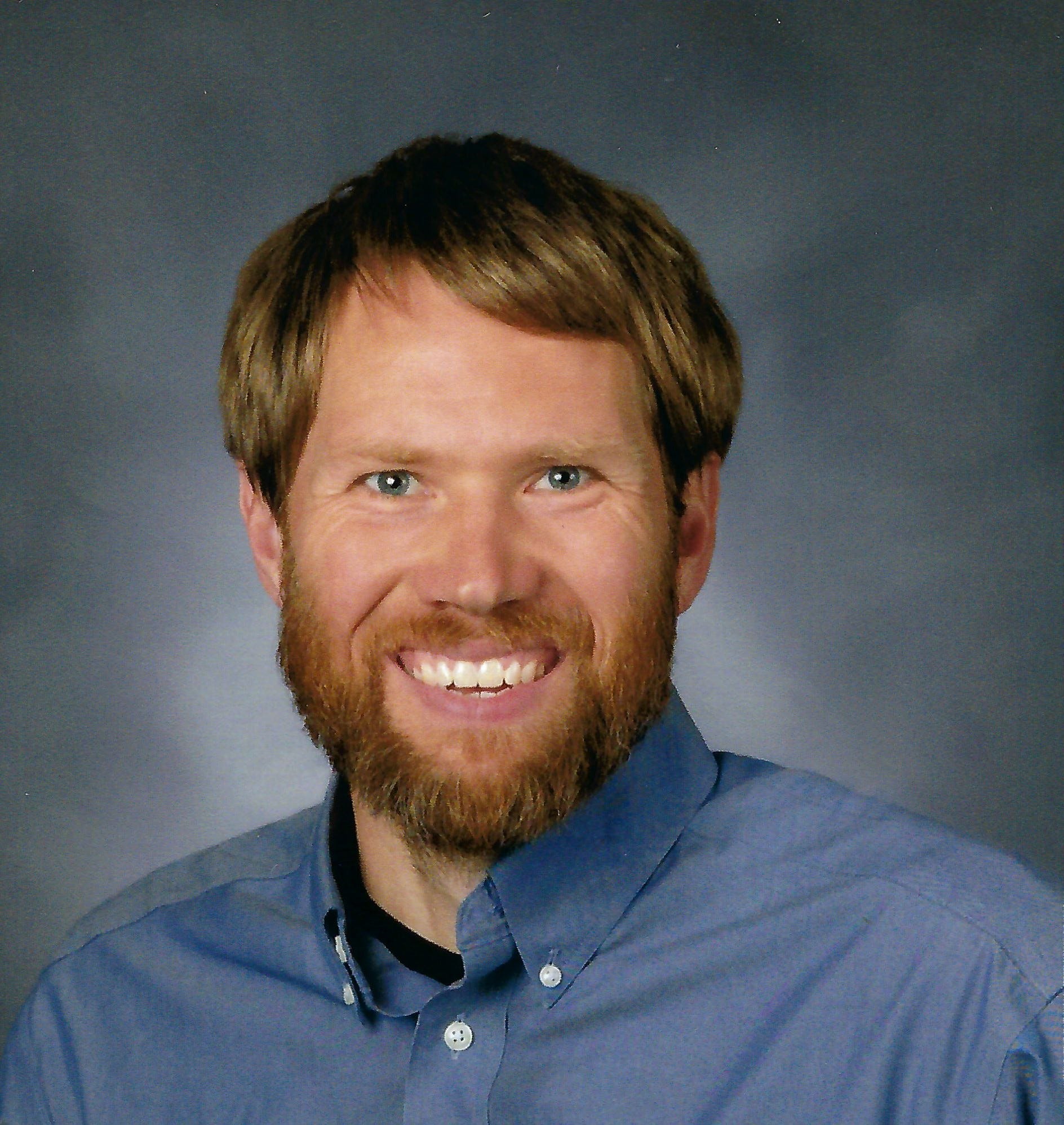
Matt is a recovering academic, a jack-of-all-trades, and an aspiring writer who lives on a homestead in Pennsylvania with his wife and their five children and an increasingly varied menagerie of farm animals. He teaches for the University of Dallas’ Classical Education MA program and muses about homesteading on his Catholic Permaculture substack.
https://gregorythegreatacademy.org/frequently-asked-admissions-questions
https://saintmartinsacademy.org/#vision