
As an Amazon Associate I earn from qualifying purchases

Classical K-12 education has a mind-heart problem.
We know and love C. S. Lewis’s “Men without Chests,” and we find his analysis of the culture of British intelligentsia circa 1948 to be compelling. We laugh at the fatuous “sophistication” of the intellectual pygmies responsible for the Green Book; we chuckle at the mental picture of their tiny, anemic bodies attached to their oversized (by comparison) heads; we guffaw at Lewis’s portrayal of their idea of human nature as “the trousered ape”.
The thought of Bertrand Russell, a brilliant analytic philosopher, publicly proclaiming the need for both Communism and universal Free Love,1 fills us with the desire to punch brilliant analytic philosophers in the face. We muster for action when we hear Lewis’s call to “irrigate the deserts” of young people’s hearts, cracked and hard and shrunken as they must be from exposure to a relentless cultural climate of arid 20th-century materialism and skepticism.
With our hearts full of noble and rightly-ordered loves, we sally forth upon our…hoses…to water the parched earth, too.
But hold on: is the educational and cultural problem for us to solve in 2025 America the same as in grey, war-weary, socialist, economically-depressed, class-bound, post-war Britain? Is the problem with our schools that they are OVER-intellectualized? Does the evidence suggest that our K-12 schools are cramming our kids’ heads full of knowledge and training them in ruthless analytical habits of thought while imparting to them cold, detached, apathetic habits of heart? Are the ranks of college professors complaining una voce that the problem with these incoming freshmen is that they are all brains? That they know too much?

When I look at the world of American K-12 classical schools, especially in the ecumenical Christian world, I see an above-average amount of rightly-ordered love--for God, family, and country for starters. I see plenty of disordered love as well, starting with the age-old, often-frantic desire “to love and be loved”, as Augustine put it in Confessions III.1. I see in our students certain confusions about loyalty and friendship and patriotism and righteousness—but “loyalty,” “friendship,” and “patriotism” are all recognizably there, and there is vigorous, noble love underneath it all.
What I do not see is deserts of sophisticated apathy. Of bloodless intellectualism.
What I do see is an American culture that is uneasy about the life of the mind, that mistrusts fancy book-learnin’. I see more than a century of institutionalized anti-intellectualism in American public schools and thus in society at large courtesy of the anti-knowledge agenda of the Progressive Education Establishment (PEE). I see a strong tendency in American religion, in churches of all denominations—could it possibly have to do with the inescapable influence of our public schools?--, to treat the faithful as if they were all heart and no head. I see a common-sense America, which I love, deeply suspicious of higher learning, which makes me sad, but which I totally understand, because of how much nonsense has been going on in American schools and universities for well on 80 years now.
We classical and humane educators and would-be soul-crafters of the American 21st century have our tasks, just as Lewis had his. But they are not the same. Our students’ hearts are not deserts--they are wild, over-irrigated, overgrown gardens, in need of a great deal of weeding and pruning, but certainly not Brazilian rain-forest, slash-and-burn clear-cutting after the fashion of Gaius and Titius.
The children’s heads need attention. Their minds are full of the wrong things--of memes and video game lore and cheat codes and animé characters and influencers and TikTok dance trends and alt-right social media and gun-tubers and K-dramas. They cannot read, and they lose the thread halfway through a Jane Austen or James Madison sentence of only average length. They cannot speak without an entire chicken coop’s worth of clucked “like, like, like, like”s. They know no poetry besides the vapid doggerel couplets of pop music, or church music composed to sound like it. They cannot reason through a single article of Aquinas without becoming horribly confused: “I don’t get it it’s like first he says the existence of God can’t be proven but like then he says it can it’s like he totally contradicts himself.” They lack the power to form mental pictures based upon words alone, so stuffed are their minds with HD video, like the giant livers of obscenely overfed French geese destined to become foie gras. They know no history or geography, certain fragments of Scripture, no theology, astronomy, geometry, or music.
If we do not fill their minds with real things, phantasms will move in; if we do not teach them to think, then serpents will persuade them to do wrong; if we do not teach them to reason, then they will be ruled by prejudice, passion, and princes.

Classical educators: by all means, continue to attend to your students’ hearts and wills. But do not let those be all that you talk and think of. Classical leaders: speak to the parents and staff not only of moral virtue, but of learning and reason. Give students’ intellects what is due to them. Don’t starve their heads because of our national prejudices, because of the bad examples of cranks and frauds posing as public intellectuals, and please not because a very good book written by a very good and clear-sighted man in another country almost a century ago said that intellectualism was the problem. Don’t keep watering where the ground is soaked. Don’t settle for cheerful, dutiful, charitable, morally-upright ignorance in yourselves or in your students. Attend to reason, to intellect, to memory, to mind.
C. S. Lewis rightly portrays the unique glory of man as being head-chest-belly. A swollen head without a chest is a monstrosity, but a headless torso is also merely a fragment of the fullness of God’s human creation.
*****
Postscript: “Brains on a Stick”
A recent post on LinkedIn by someone who claims competence in the area(s) of “Encouraging and Equipping Christian School Leaders and Educators” offered the following encouragement:
Too often, Christian education gets reduced to ‘thinking,’ as if the measure of success were simply what a student can recall on a test or recite in a Bible class…but students are not just “brains on a stick.”
Wow. All that ‘thinking’ certainly does put us at risk of inadequately attending to that magical “whole person.”2 Brains on a stick indeed. GIANT brains, teeming with electro-neurological recitation activity, running at test-cramming wattage levels so high they could light up an major airport runway at night.
But in defense of the Christian educators who “all too often” make this mistake, you can see how the richness and diversity of such an intellectual life, consisting as it does of BOTH memorizing for written regurgitation AND for oral regurgitation, would tempt one to neglect the whole person. Cramming for social studies tests, memorizing out-of-context proof-texts and being quizzed on the word-perfection of the recitations, with no regard to meaning or even literal comprehension, cramming for science tests, cramming for vocabulary tests…there’s just so much to explore in the life of the mind.
Permit me, instead, to do a little Encouraging and Equipping of my own:
Too often, noble-hearted and well-intentioned educators, Christian, classical, Christian-classical, classical charter, Classical Christian, what have you, have, due to the poverty of their own schooling, for which they are in no wise culpable, such a fragmentary understanding of intellect that they can conceive of no higher mental operations for schoolchildren than memorizing words and solving some math problems. Rightly recognizing that a human who can do nothing with his mind other memorize and calculate is not a “whole person” by any definition, and is just a step above C. S. Lewis’s infamous “trousered ape,” but wrongly imagining ‘thinking’ to consist only of these two low-level operations, they pronounce the intellect to be overrated and not worth fretting too much about, so it’s on to cultivating character and building school traditions and holding inspirational virtue-themed pep-rallies. There are SO MANY examples of Christian learning we could look to and model our own ideals, schools, and practices after, starting with St. Paul, St. Augustine, Gregory of Nyssa, Dante, Aquinas, Hildegard von Bingen, Erasmus and Melanchthon, Ignatius of Loyola, Catherine of Siena, Newman…Elizabeth Anscombe, T. S. Eliot, Dorothy Sayers, Tolkien, Bonhoeffer, Edith Stein, Alexander Solzhenitsyn…
If offered a choice between being a fully-developed “brain on a stick” and a fully-embodied higher-order primate with a tiny cranium and the ability to recite certain stock phrases upon command, I might be inclined to accept the former. Thankfully, there is another option.
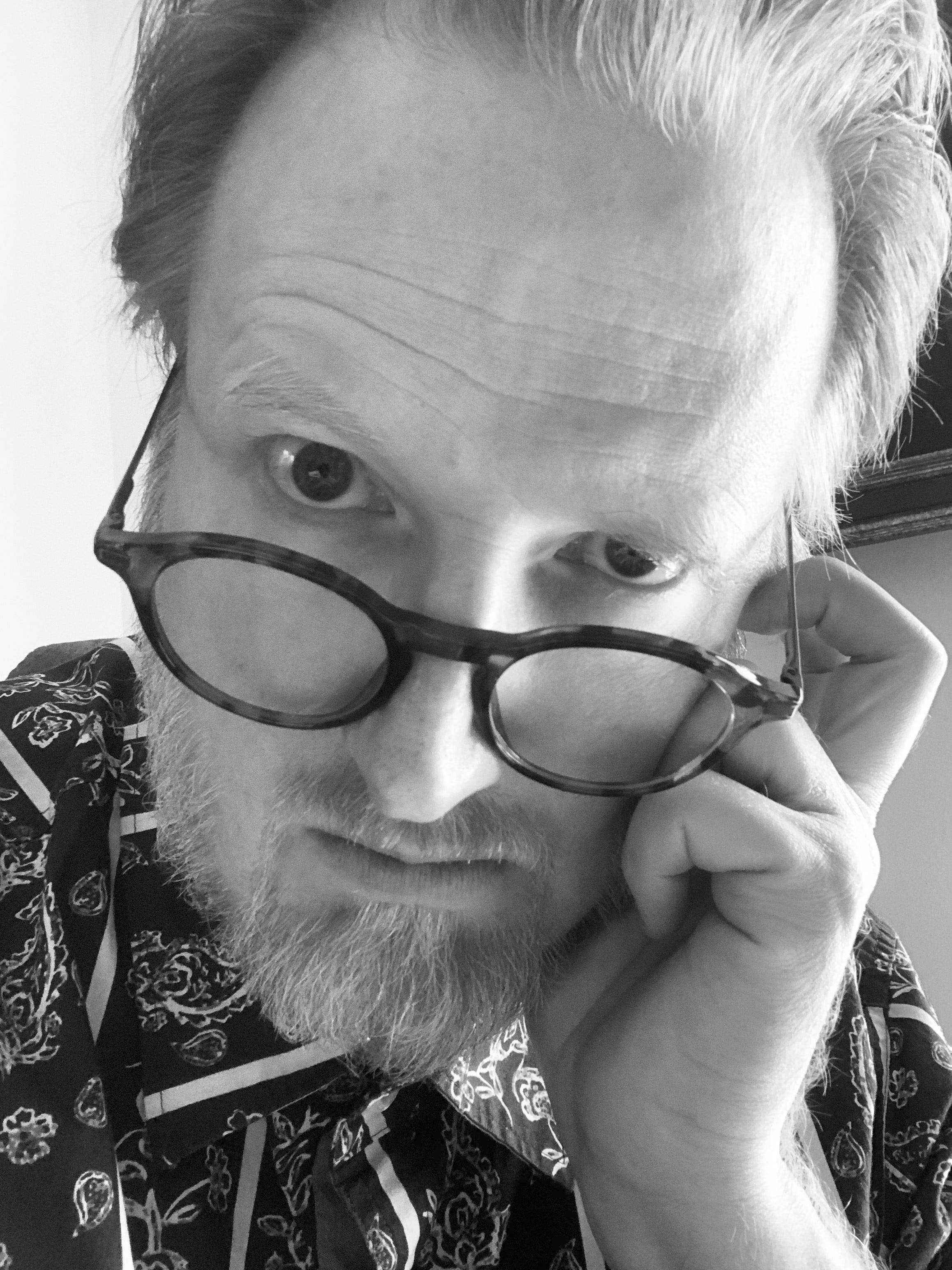
Andrew Ellison has been a leader in the classical liberal education movement since 1997, having served as a high school teacher, headmaster, and charter school administrator for 26 years in two states before moving into higher education. He is a Senior Writer for Cana Academy and posts regularly about classical education and other topics on LinkedIn. Ellison is currently Vice President of Enrollment Management at the University of Dallas. He writes from Irving, Texas.
This is what is known as interSEXionality.
A concept progressive educationists only started talking about in the 1970s: “Yes, reading scores are down, again, but we don’t measure our success by such categories. We teach the whole person. And you should take a look at some of the holistic whole-personhood growth assessment diagnostic matrix reports which our new Campus Whole Personhood Facilitator has recently completed. Our students’ integral whole-person adjustment scores are skyrocketing!” Good times back in the 1970s.